Ecological Importance
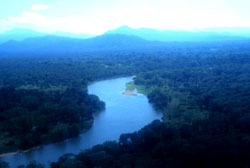
Río Plátano harbors important coastal marine areas and a variety of rich habitats, including extensive mangroves, wetlands, lagoons, coral reefs and cays. Most of Río Plátano, however, is covered by rainforest, which harbors the greatest biodiversity in the reserve. Trees commonly found in the forests include mahogany, Spanish cedar, carapa, and ocote pine. In 2001, a Rapid Ecological Assessment identified 586 plant species, of which 23 were new to Honduran flora records. Additionally, the reserve hosts 130 mammal species, as well as 36 percent of reptile species, 57 percent of bird species, and 70 percent of fish species found in Honduras.
Threats
The most severe threats to Río Plátano are logging and the advancing agricultural frontier. Roads opened by loggers then provide access to settlers who clear land for farming and ranching. These activities lead to increased soil erosion, reduced water production, and contamination of water resources by agro-chemicals. In addition, the hunting and trafficking of many animal species for the exotic pet market is significantly reducing their populations. The single stress shared by all areas in Río Plátano is habitat loss and the continued loss of vulnerable species. The lack of appropriate environmental policies and their enforcement also plagues Río Plátano, as well as other Honduran protected areas.
A Strategy of Success
Established in 1998, the Parks in Peril program (PiP) in Río Plátano made major advances in the reserve. Activities included establishing basic infrastructure, increasing on-site staff, creating long-term financial and management plans, gathering scientific and social data needed for better conservation strategies, and strengthening MOPAWI, the leading organization at the site.
PiP is responsible for the successful facilitation of community involvement among adults and children within Río Plátano. Endangered sea turtles and green iguanas were the focus of two community conservation activities. The sea turtle project, which protected more than 7,000 leatherback and loggerhead turtles and was nominated for the National Environmental Award, was considered a major success. Both projects attracted the attention of outside communities who hoped to begin similar projects.
MOPAWI was responsible for implementing an ecotourism project that was developed in Las Marias, a community visited by tourists since the 1980s. MOPAWI also conducted a Rapid Ecological Assessment of Río Plátano, which involved over 60 people and provided the basis for management decisions.
Read more about Río Platano...
MOPAWI
The Nature Conservancy in the Honduran Mosquitia
Read more about projects in Honduras...
Honduras Partner Organizations
The Nature Conservancy in Honduras






)