Ecological Importance
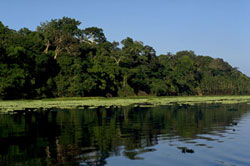
Fish are a high priority for conservation in Pacaya-Samiria due to their ecological and economic value. The immense tracts of forests of mahogany, moriche palm and tagua are home to large populations of macaw, including the endangered scarlet macaw, and important game species such as white peccary, tapir, and deer. Endangered species such as the black caiman, Amazonian manatee, side-necked turtle, giant river otter and pink freshwater river dolphin also find refuge in the reserve.
Threats
Widespread human migration into the Amazon since the 1970s has eliminated key forest tracts and fractured others. Uncontrolled hunting, logging for mahogany, unsustainable fishing and harvesting of non-timber forest products such as heart of palm further threaten natural areas.
A Strategy of Success
PiP has been active in Pacaya-Samiria since 2001 and has addressed specific conservation issues by collaborating with various partner organizations that have been historically involved in the area. ProNaturaleza coordinates with local communities and other stakeholders such as government officials and NGO representatives to hold workshops and meetings to discuss natural resource management and ecotourism issues. Upon site consolidation in 2007, responsibility of Pacaya-Samiria is expected to be given to the National Institute of Natural Resources (INRENA).
Conservation Area Planning (CAP) has been used to define a threats monitoring program in the reserve. CAP has been widely embraced throughout the country, with two more Peruvian parks implementing its methodologies and tools.
Seventy percent of the fishing community has participated in the drafting and implementation of fishing management plans to support their livelihoods; the first fish management plan in Peru was approved in 2004. With support from local fishing communities, seven additional management plans are expected.
Read more about Pacaya-Samiria...
ProNaturaleza







)